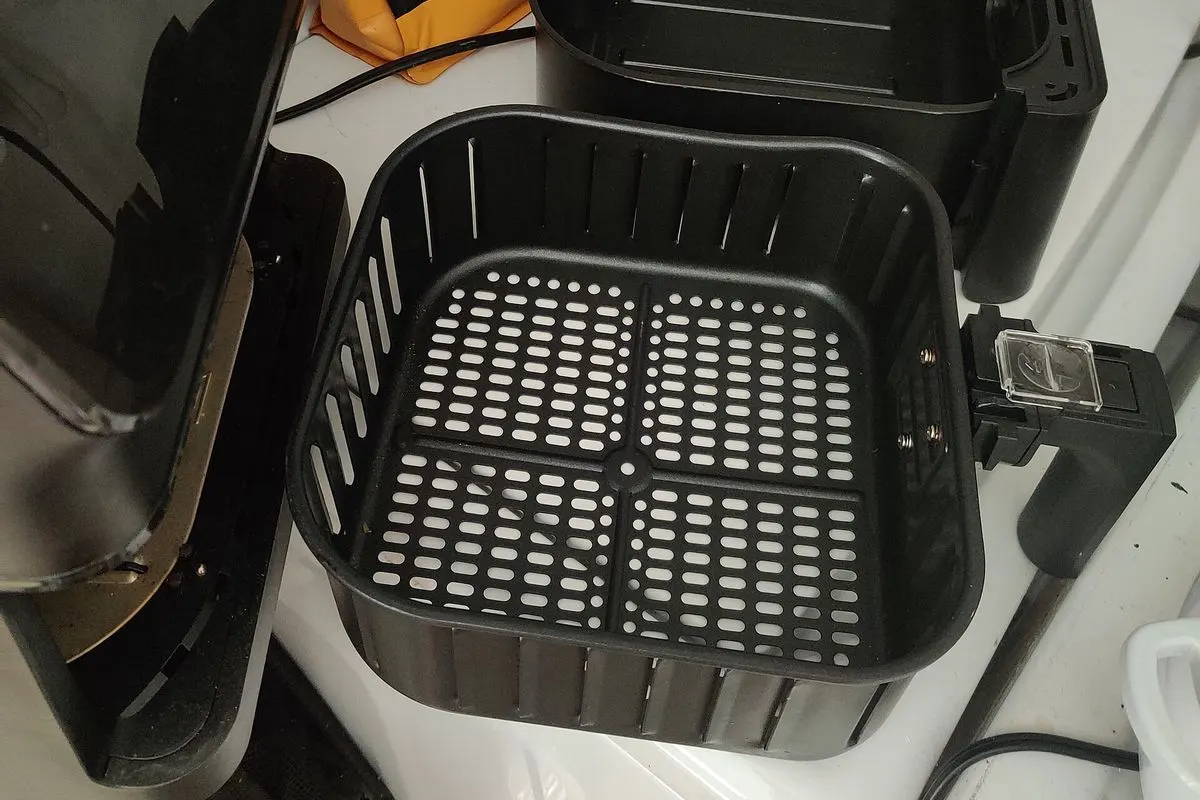
Perforated parchment is the best everyday air fryer liner, silicone with holes is best for saucy food, and foil is fine only when it’s weighed down and away from acidic food. Never preheat with an empty liner — the fan can blow it into the heating element.
Look at the liner in your air fryer right now. Does it have holes? If not, it might be the reason your food isn’t crispy on the bottom. And if it’s sitting in there loose while you preheat, it could be a fire risk.
Here’s the simple guide to parchment, foil and silicone liners: what’s safe, when to use each, and when to use nothing at all.
The golden rules for any liner
- Food on top, always. The fan is strong; a loose liner can fly into the heating element.
- Never preheat with an empty liner inside.
- Leave space for air. Don’t cover the whole basket bottom or block the holes completely.
- Keep it below the element. Nothing should touch or come close to the heating coil.
Read next: Does Preheating Your Air Fryer Actually Matter?
Parchment paper
Best for: fish, cheesy or sticky foods, baked goods, breaded foods that might stick.
- Buy perforated air fryer parchment (round or square to match the basket), or cut regular parchment a bit smaller than the basket and poke holes in it.
- Check the box for the maximum temperature — many are rated around 420–450°F (215–230°C).
- Don’t confuse it with wax paper, which melts and smokes. Never use wax paper in the air fryer.
Aluminum foil
Best for: wrapping foods that need to stay moist (like ham), covering casseroles, shielding parts that brown too fast.
- Fine when it’s weighed down and doesn’t cover the whole bottom.
- Avoid with acidic foods (tomato, citrus, vinegar): they can react with the foil.
- Some manufacturers say not to use foil, so check your manual.
- Shiny or dull side doesn’t really matter.
Silicone liners
Best for: saucy wings, glazes, marinated meats, anything that drips a lot.
- Reusable and dishwasher-safe on most brands.
- Look for food-grade silicone with a temperature rating above your cooking temp (many are rated to about 428–480°F / 220–250°C).
- Choose ones with holes or raised ridges. A solid, flat silicone bowl blocks the air and can make food steam.
- Wash well — old grease builds up in the ridges.
Side-by-side comparison
| Parchment | Foil | Silicone | |
|---|---|---|---|
| Reusable | No | No | Yes |
| Airflow | Good if perforated | Poor if it covers the bottom | Good if it has holes/ridges |
| Crispiness | Good | Fair | Fair to good |
| Sticky/saucy foods | Good | Good | Best |
| Acidic foods | Yes | Avoid | Yes |
| Preheat empty? | Never | Never | Not needed, but OK (it’s heavy) |
| Watch out for | Max temp on box | Element contact, manual warnings | Cheap non-food-grade silicone |
When to use no liner at all
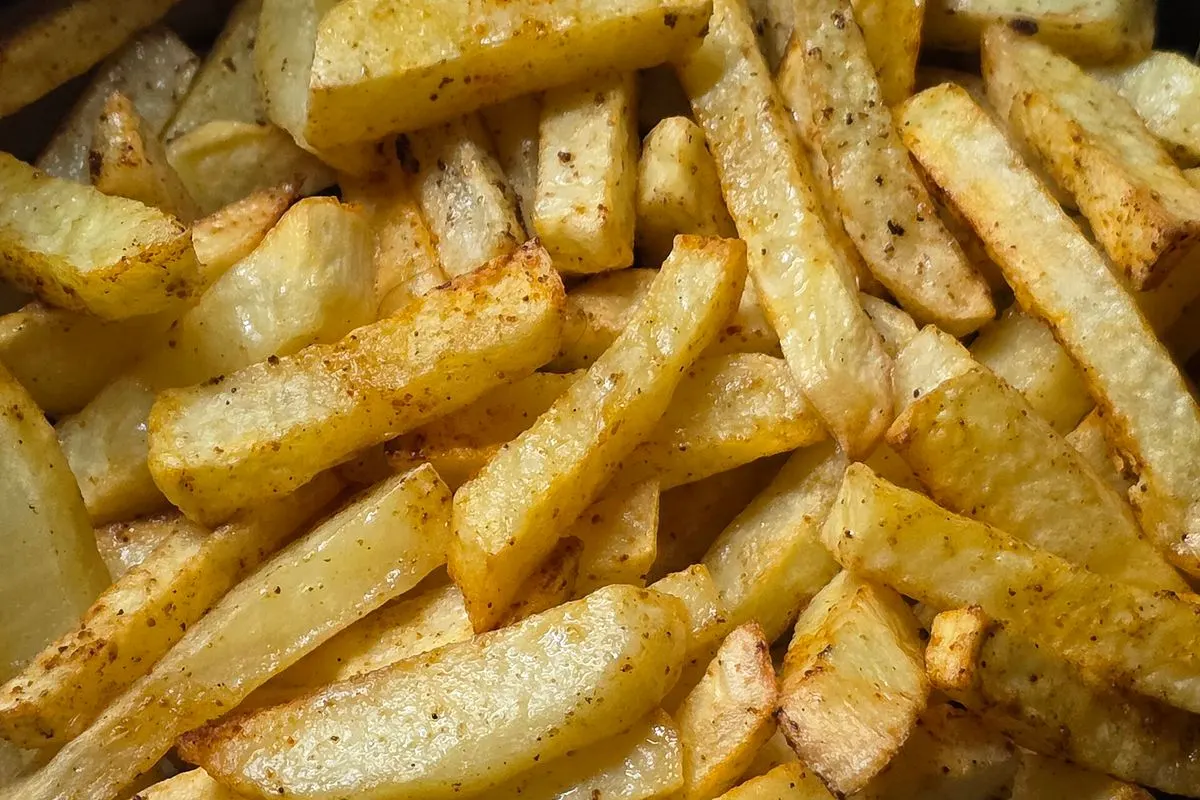
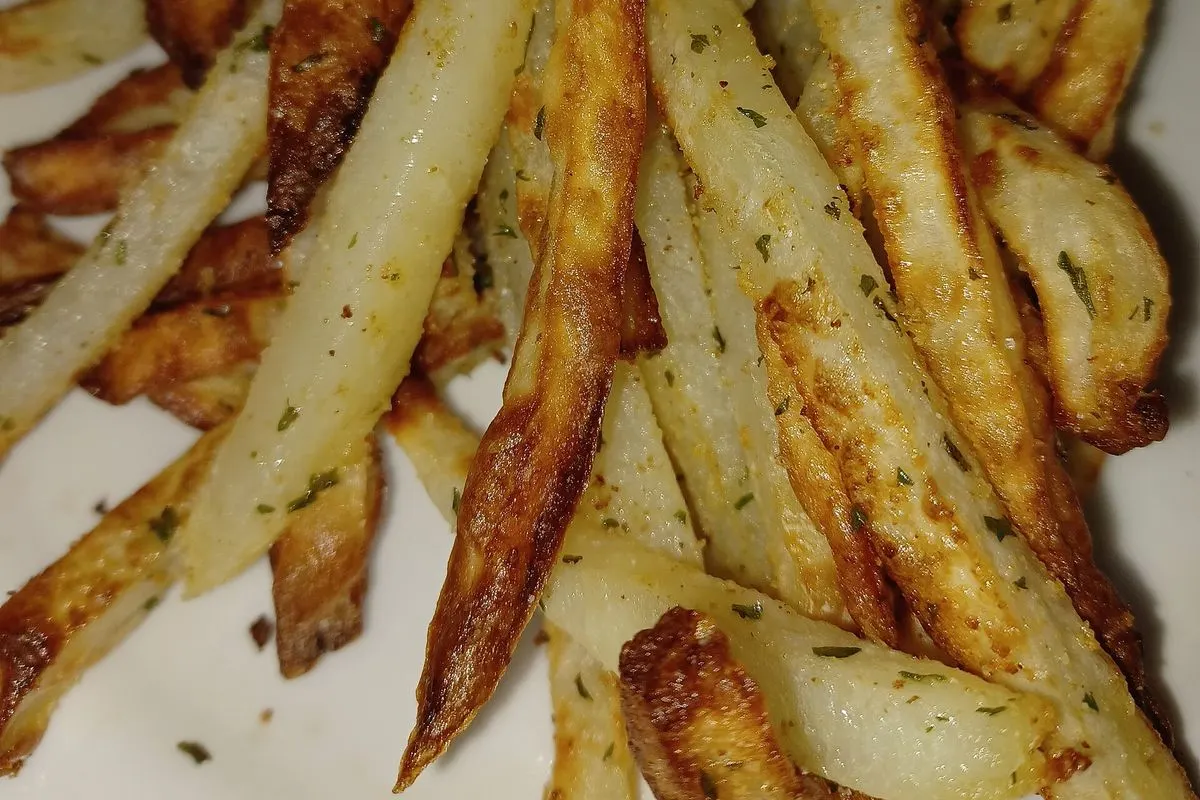
For maximum crisp — fries, roast potatoes, Brussels sprouts, chicken tenders — cook straight on the basket with a light coat of oil. Liners are for convenience, not crispiness.
Liners don’t replace cleaning
Grease still drips around the liner into the drawer. Empty it after fatty foods and deep clean the air fryer once a month.
FAQ
Can I put parchment paper in the air fryer?
Yes, with food on top to weigh it down, and ideally perforated or cut smaller than the basket. Don't preheat with empty parchment inside, and check the box for the maximum temperature (often around 420–450°F / 215–230°C).
Is aluminum foil safe in an air fryer?
Yes, if it's weighed down by food, doesn't cover the whole basket bottom and stays away from the heating element. Avoid it with acidic foods like tomato or citrus. Some manufacturers advise against foil — check your manual.
Do silicone liners affect crispiness?
Solid silicone liners can make the bottom of food less crispy because they block air. Choose liners with holes or raised ridges, and use them mostly for saucy or sticky foods.
Sources
We check temperatures and safety advice against these official sources. Spotted something wrong? Email [email protected].