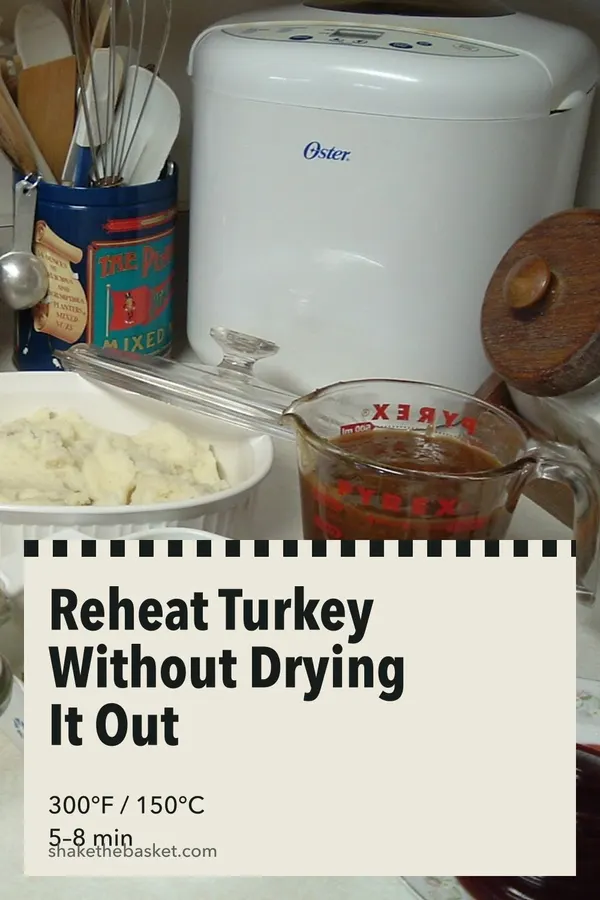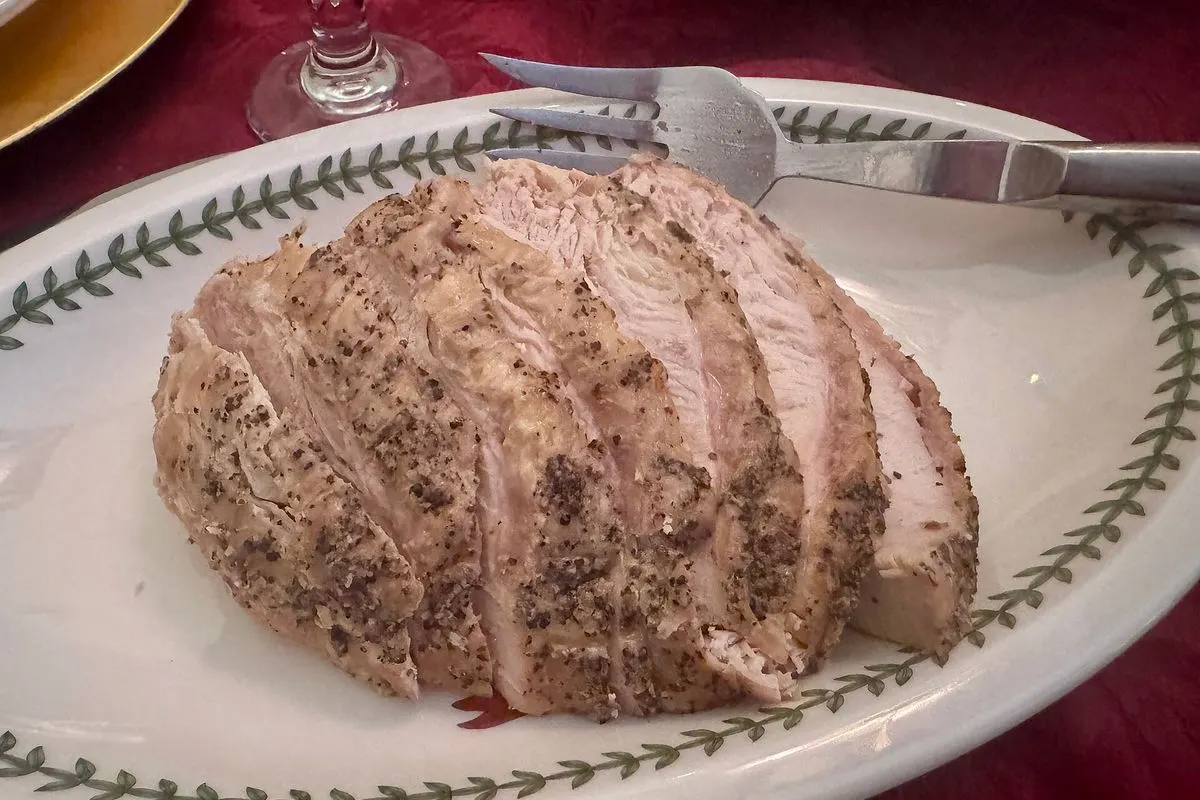
Wrap the sliced turkey in foil with 1–2 tablespoons of broth and air fry at 300°F (150°C) for 5–8 minutes, until it reaches 165°F (74°C). The foil traps steam so the meat stays moist; open it for the last minute if you want the edges a little crisp.
That’s the whole trick. The mistake most people make is reheating turkey uncovered at high heat, which is great for fries and terrible for lean breast meat.
Step by step
- Slice first. Thin slices (about 1/2 inch / 1 cm) reheat evenly. Big chunks dry out on the outside before the middle is hot.
- Make a packet. Lay the slices on foil, slightly overlapping. Add 1–2 tbsp (15–30 ml) turkey or chicken broth (or gravy) and a small piece of butter if you like.
- Seal loosely. Fold the foil into a packet, leaving a little room for steam. Make sure it’s weighed down by the turkey and nowhere near the heating element.
- Air fry at 300°F (150°C) for 5–8 minutes.
- Check the temperature. The thickest slice should read 165°F (74°C), the target for reheated leftovers on the USDA safe temperature chart. On thin slices, slide the thermometer in from the side so the tip sits in the middle of the slice. Below 165°F, close the packet and give it 2 more minutes.
- Optional crisp: open the packet and air fry 1 minute at 375°F (190°C).
Timing by amount
| Amount | Packet | Time at 300°F / 150°C |
|---|---|---|
| 1 serving (4 oz / 115 g) | 1 small packet | 4–6 min |
| 2–3 servings | 1 large packet | 6–8 min |
| Frozen slices | 1 packet, extra broth | 10–14 min |
| Drumstick or thigh (bone-in) | Wrapped, no broth needed | 10–14 min |
Air fryers vary by wattage, so check with a thermometer instead of trusting the clock.
Turkey already in gravy? Skip the foil packet and use a small oven-safe dish covered with foil: 320°F (160°C) for 8–10 minutes, stirring once, until the center of the dish reads 165°F. The gravy does the job of the broth. Thick slices or chunks (1 inch / 2.5 cm or more) need 3–4 extra minutes; it’s faster to slice them thinner before they go in. Shredded or pulled turkey reheats in about the same time as slices, but spread it flat in the packet so there’s no cold clump in the middle.
Why 300°F and not 400°F
Breast meat is lean, about 1–3% fat once the skin is off, so there’s almost nothing to protect it from drying. The air fryer’s fan is the problem: it’s designed to pull moisture off the surface, which is great for fries and bad for sliced turkey. At 400°F, the edges of a 1/2-inch slice turn dry and curled before the center reaches 165°F. At 300°F inside a foil packet, the broth turns to steam, the steam heats the meat from all sides, and the fan’s drying effect never reaches it. The low temperature buys you a margin of a minute or two instead of seconds.
Air fryer vs. microwave vs. oven
| Method | Time for 2 servings | Texture | Best for |
|---|---|---|---|
| Air fryer, foil packet, 300°F / 150°C | 6–8 min | Moist, even; edges can crisp at the end | Slices for plates and sandwiches |
| Microwave, covered, medium power | 2–3 min, stirring or turning halfway | Can go rubbery and heats unevenly | Speed, one plate at a time |
| Oven, covered, 325°F / 165°C | 20–30 min | Moist, even | Big batches for a crowd |
| Skillet with a splash of broth, lid on | 4–6 min | Moist; good for shredded meat | Tacos, hash, soup add-ins |
Whatever the method, the finish line is the same 165°F (74°C). Microwaves are the most likely to leave cold spots, so cover the plate, rotate it, and check more than one spot. The USDA advises against slow cookers and chafing dishes for reheating, because they take too long to get through the 40–140°F zone (USDA leftovers and food safety).
What about dark meat and skin?
Dark meat is more forgiving. Thighs and drumsticks can go in unwrapped at 350°F (175°C) for 8–10 minutes if you want the skin crisp again; wrap them if they’re already sliced off the bone.
Skin on its own crisps up nicely: 2–3 minutes at 375°F (190°C), unwrapped. It’s the best snack of the whole weekend.
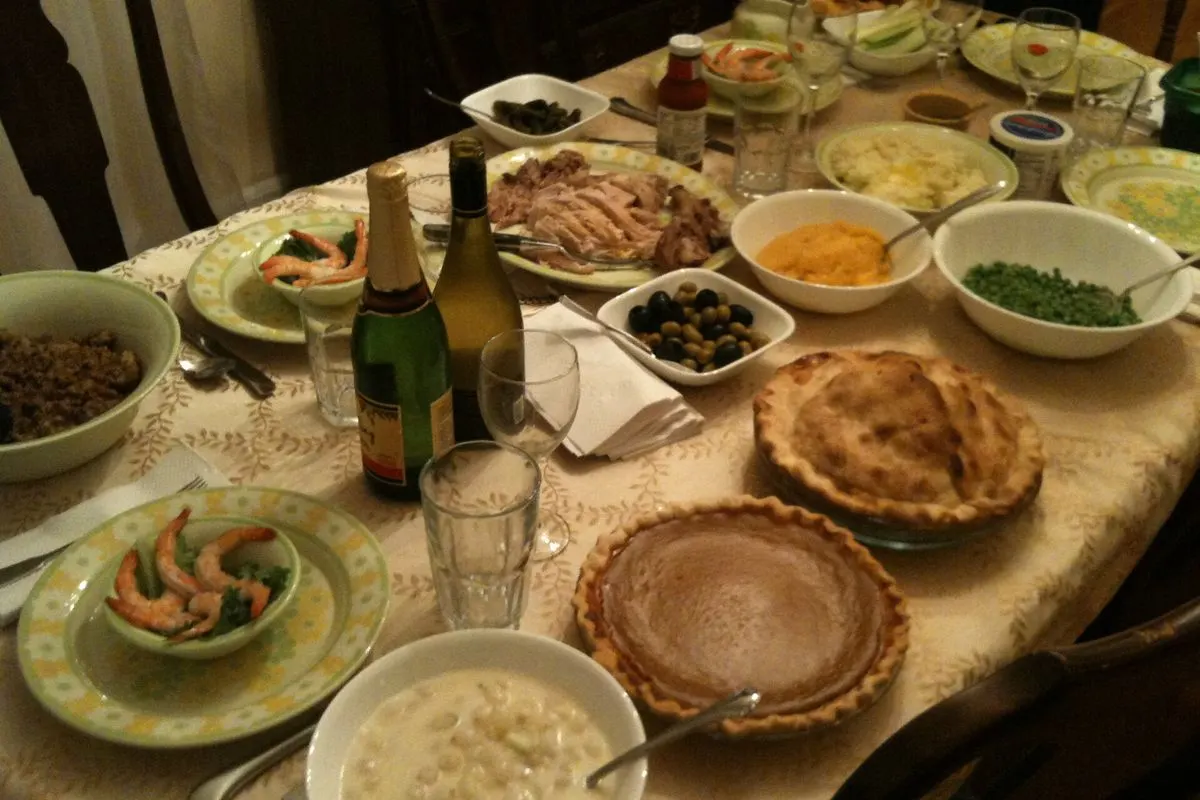
The rest of the Thanksgiving leftovers
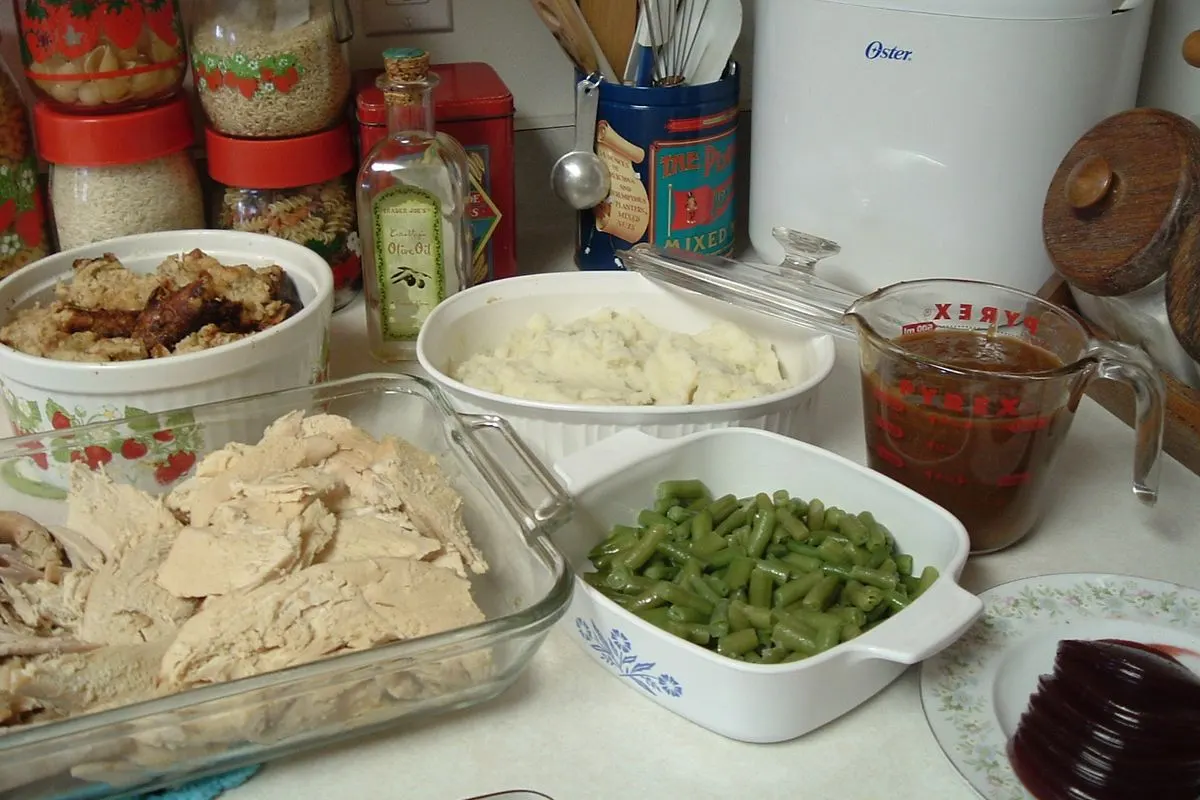
The air fryer handles most of the table. Use small oven-safe dishes and cover anything soft with foil:
| Leftover | How | Time and temp |
|---|---|---|
| Stuffing | 7-inch dish, a splash of broth, foil on; uncover for the last 3 min | 325°F / 160°C, 10–12 min |
| Mashed potatoes | Dish, a pat of butter, foil on; stir halfway | 320°F / 160°C, 10–12 min |
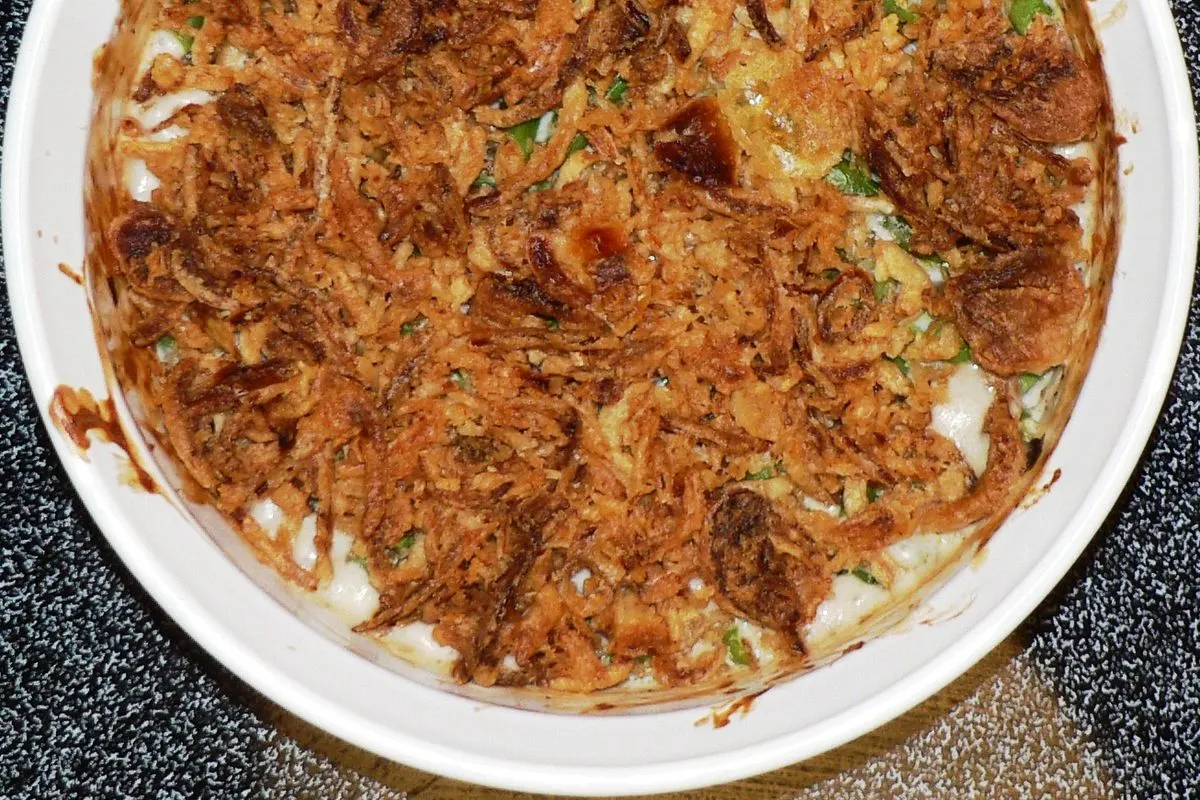
| Green bean casserole | Dish, foil on; fresh onions on top for the last 2 min | 320°F / 160°C, 8–10 min |
| Sweet potato casserole | Dish, foil on; marshmallows only for the last minute | 320°F / 160°C, 8–10 min |
| Roast potatoes | Straight in the basket, single layer | 380°F / 195°C, 5–6 min |
| Dinner rolls | Basket, no foil | 300°F / 150°C, 3–4 min |
| Pumpkin or pecan pie, a slice | Basket on a small piece of foil | 300°F / 150°C, 3–4 min |
| Gravy | Not in the air fryer. Bring it to a rolling boil on the stove | Stovetop |
Everything except pie should reach 165°F (74°C) in the center. Gravy goes on the stove because the USDA recommends bringing sauces and gravy back to a boil, and a dish of liquid near an air fryer element just splatters.
Storage rules that matter
- Refrigerate within 2 hours of the meal, 1 hour if the room is above 90°F (32°C).
- Eat within 3–4 days, or freeze, per the USDA Thanksgiving leftovers guidance.
- Store in shallow containers so it cools fast. Slice the meat off the bones first; a whole carcass in the fridge cools too slowly in the middle.
- Freeze in portions with a spoonful of gravy so it reheats moist. Frozen cooked turkey stays safe indefinitely at 0°F (-18°C), but it’s best within about 2 to 6 months, according to the FoodSafety.gov cold storage chart.
- Thaw frozen portions in the fridge overnight, or reheat them straight from frozen in the foil packet (see the table above).
| Day | Turkey from Thursday |
|---|---|
| Thursday | Into the fridge within 2 hours of dinner |
| Friday to Sunday | Fine to reheat and eat |
| Monday | Last day: eat it or freeze it |
| Tuesday on | Throw out anything that wasn’t frozen |
Do you have to reheat it at all?
No. Turkey that went into the fridge within 2 hours and is inside the 3–4 day window can be eaten cold, straight from the fridge: in a sandwich, on a salad, in a wrap. Reheating to 165°F matters when you want it hot, and every time you warm it back up. What you shouldn’t do is warm it partway, let it sit on the counter, and then put it back in the fridge.
How to tell when it’s time to throw it out
Go by the calendar, not your nose. The bacteria that cause food poisoning usually don’t change how food smells, looks or tastes, so turkey can seem fine on day 6 and still make someone sick. A sour smell or a slimy, sticky surface means it’s spoiled for sure, but the absence of those signs doesn’t mean it’s safe. When in doubt, throw it out, and freeze portions on day 2 or 3 if you know you won’t finish them.
Keeping turkey warm for a buffet or a second round
If people are eating in waves, don’t leave a platter out all afternoon. Keep reheated turkey in a covered dish in a 200°F (95°C) oven, where it stays above 140°F (60°C), or reheat small packets in the air fryer as people come back for seconds. Each packet takes 5–6 minutes, which is about how long it takes to refill a plate of sides.
Mistakes that make leftover turkey dry
- Reheating the whole breast in one piece. The outside overcooks while the center warms. Slice first.
- No liquid. Even a tablespoon of broth makes the difference between moist and chalky.
- Reheating the same portion twice. Each round dries it more. Take out only what you’ll eat.
- Moving the packet to the microwave. If you switch methods, take the turkey out of the foil first; metal in a microwave sparks.
- High heat, no foil. Save the 375°F blast for the last minute, packet open, if you want crisp edges.
Turn leftovers into a new meal
- Turkey quesadillas: shredded turkey, cheese and a spoonful of cranberry sauce in a flour tortilla, brushed with oil; air fry at 360°F (180°C) for 5–6 minutes, flipping once, with a small rack on top so it doesn’t fly open.
- Turkey “crispy” bites: toss cubes with a little oil and seasoning and air fry at 380°F (195°C) for 5–6 minutes, shaking once. Great in wraps.
- Turkey and stuffing cups: press leftover stuffing into ramekins, add turkey and gravy, and heat at 325°F (160°C) for 8–10 minutes.
- Day-after breakfast: use leftover potatoes in our hash brown egg cups.
Cooking the turkey this year? Our air fryer turkey breast is done in about an hour, and the Thanksgiving sides list has the full plan.
FAQ
How long is leftover turkey good for?
USDA guidance is 3 to 4 days in the fridge. Refrigerate it within 2 hours of cooking. For longer, freeze it in portions.
Can I reheat turkey more than once?
It's safe if you bring it to 165°F (74°C) each time, but quality drops every round. Reheat only what you'll eat.
Can I reheat frozen turkey slices in the air fryer?
Yes. Keep them in the foil packet with broth and add 4–6 minutes, then check that the thickest slice reaches 165°F (74°C).
Sources
- USDA FSIS: Leftovers — Keep the Best Part of Thanksgiving Safe
- USDA FSIS: Safe Minimum Internal Temperature Chart
We check temperatures and safety advice against these official sources. Spotted something wrong? Email [email protected].